- Developer
- Pixelbite
- Installs
- 10M+
- Downloads
- 0
- Views
- 1
- Updated
- Nov 6, 2026
Screenshots
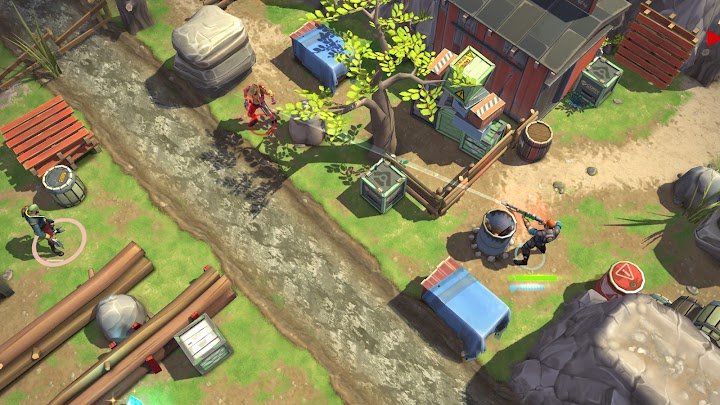
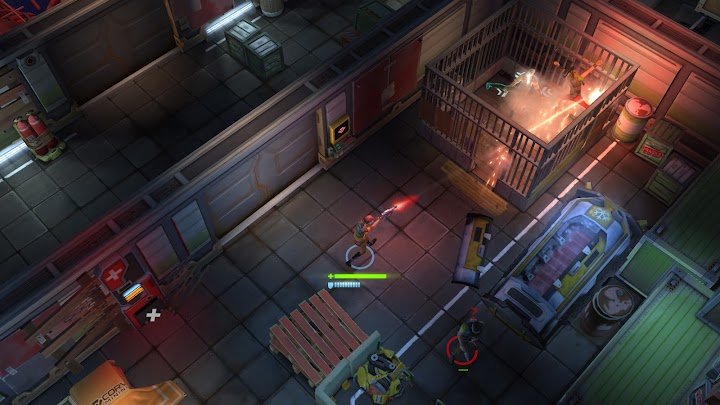
About Space Marshals 2
Space Marshals 2: The Mobile Shooter That Punishes You for Holding the Fire Button
Updated November 2026 · Written by the NovaRunway editorial team
Quick Verdict
Space Marshals 2 is a top-down tactical shooter that quietly refuses to be a dual-stick shooter. You can play it like one — charge in, hold fire, hope for the best — but the game will kill you for it, repeatedly, on the normal difficulty. The real design is about cover, sightlines, flanking and thinning enemy numbers before the shooting starts. That makes it slower and more deliberate than most mobile action games, and considerably more satisfying when a plan works. The catch is controls: dual-stick schemes always feel cramped on a touchscreen, and this game asks for precision positioning rather than just aiming. A gamepad fixes that almost entirely. It is a premium title — no adverts, no energy timers, no microtransactions — which is increasingly rare and worth supporting. The other hurdle is compatibility: it requires OpenGL ES 3.0, so some older or budget devices simply cannot run it.
What Space Marshals 2 Actually Is
Space Marshals 2 is a top-down tactical shooter set in a science-fiction “wild west” — a frontier-galaxy setting with sheriffs, outlaws, bounty hunters and a lot of bad decisions. You play as Specialist Burton, a law-enforcement operative working against the criminal factions scattered across the sector.
It is developed by Pixelbite, a Swedish studio with a track record in mobile action games, and it is the direct sequel to the original Space Marshals. The story picks up from the first game and continues through a mission-based campaign, with dialogue between missions and a cast of characters who reappear across the 20-mission structure.
Structurally, the game is episodic and mission-based rather than open-world. Each mission is a self-contained level with a defined objective, a rating system based on your performance, and a checkpoint structure that lets you retry from the last safe point rather than the beginning. That structure is a large part of why it works on mobile: missions are short enough for a commute, and the retry loop is fast enough that failure does not feel like punishment.
It is a premium game — a one-time purchase, not free-to-play. There are no adverts, no energy systems, no loot boxes and no microtransactions. That is worth saying plainly, because it shapes the entire experience: the game is designed to be difficult and to make you replay a mission, not to nudge you toward a purchase.
The Core Design: Tactical First, Shooter Second
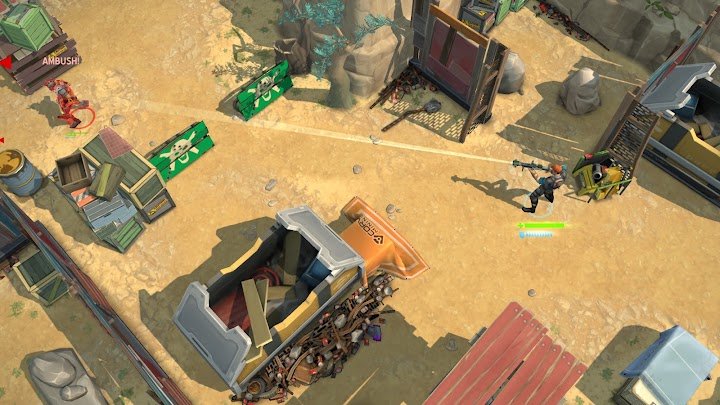
The most important thing to understand about Space Marshals 2 is that its combat is information-driven. Enemies have vision cones, patrol routes and awareness states. You have cover, a limited load-out and a small set of tools. The game rewards players who observe before they engage.
Three systems carry that design:
- Cover and flanking. You take reduced damage behind cover, and enemies do the same. Attacking from the side or rear bypasses cover bonuses, which means the correct answer to a entrenched enemy is rarely “shoot it from the front.”
- Sightlines and detection. Enemies detect you based on line of sight and noise. Breaking line of sight resets their awareness. This is what makes stealth viable rather than decorative.
- Faction friction. Different enemy factions will fight each other if you lure them together. This is one of the game's best mechanics and one of its most underused by new players — a well-placed distraction can turn a six-enemy room into a two-enemy room before you fire a shot.
The result is a game that plays more like a small-scale tactics puzzle than a shooter. On higher difficulties, charging a room is close to guaranteed death. On normal, it is survivable but costly, and the mission rating at the end reflects how many times you had to fall back on raw firepower.
Stealth: Optional, But It Is Where the Game Shines
Stealth in Space Marshals 2 is not a fail-state system. You are not penalised for being spotted, and the game does not end if an alarm goes off. What happens is subtler: being detected makes the encounter harder, and harder encounters cost you mission rating and time.
The stealth toolkit is deliberately broad:
- Silenced weapons let you remove isolated enemies without triggering a room-wide alert.
- Stealth takedowns eliminate unaware enemies at close range.
- Distractions — thrown objects and gadgets — pull enemies out of position so you can isolate them.
- Turret hacking turns the level's own defences against their owners, which is both effective and deeply satisfying.
- Proximity mines and drones let you shape an encounter before it starts.
The trade-off is time. A full-stealth approach to a mission can take three times as long as a loud one, and the game does not always reward the extra effort proportionally. This is the most common criticism of the design: stealth is clearly the intended playstyle, but the mission rating system sometimes values speed and body count over clean execution. Players who want to ghost every level may find the scoring frustrating; players who treat stealth as a tool rather than a rule will get more out of it.
Load-Out and the Weapon Roster
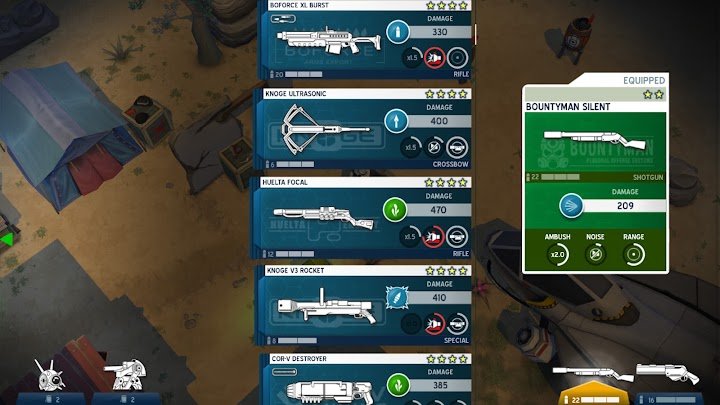
Before each mission you choose a load-out, and the constraint is the interesting part. You carry:
- One two-handed weapon — shotguns, assault rifles, sniper rifles, energy weapons.
- One single-handed weapon — handguns, crossbows, throwing axes and similar.
- Body armour, which affects your health pool and sometimes movement.
- Grenades and gadgets — frag grenades, flashbangs, drones, turrets, proximity mines.
That “one of each” limit is the design's smartest constraint. You cannot carry a sniper rifle for long sightlines and a shotgun for close quarters. You have to commit, and the level's layout determines whether that commitment was correct. The game advertises over 70 weapons, and while many are variations within a class, the differences between a silenced pistol, a crossbow and a throwing axe are meaningful in practice.
Armour is a genuine decision rather than a stat upgrade. Heavier armour increases survivability but can slow you down, which matters when stealth and repositioning are the core loop. Light armour plus a silenced load-out is a completely different playstyle from heavy armour and a shotgun, and both are viable on the right mission.
Mission Structure and the TAMI Rating
The campaign runs 20 missions, each with performance-based rewards. The rating system — referred to in-game as TAMI, the agency watching your performance — grades you on how you handled the mission, with rewards tied to the grade.
In practice, the rating encourages replay. A mission you scraped through with three deaths and an alarm going off can be revisited with a better load-out and a plan, and the difference in outcome is noticeable. That replay loop is the game's main source of longevity, because there is no open world or endless mode to fall back on. Twenty missions is a finite package, and the value comes from doing them well rather than doing them once.
Mission length varies, but most sit in the 10–20 minute range for a careful player. Checkpoints are generous enough that a failed stealth attempt does not send you back to the start, which is important for a mobile game where sessions get interrupted.
How It Plays on a Phone: Controls and the Controller Question
This is the section that decides whether you should download it.
The touch controls are functional but not ideal. Space Marshals 2 uses dual-stick-style controls with several layout options, and the game does what it can to make them work — adjustable schemes, contextual buttons, and a slower pace than a run-and-gun shooter. But the game asks for something dual sticks are bad at on glass: precise positioning relative to cover, and quick direction changes when an enemy flanks you. Aiming is fine; moving with intent is where thumbs struggle.
Gamepad support changes the game. The mobile build supports controllers, and with one connected the encounter design makes sense. Cover-to-cover movement, flanking angles and grenade placement all become controllable rather than approximate. If you own a Bluetooth gamepad, this is the way to play, and it is not a minor improvement.
Performance is generally strong — this is a well-optimised game with a stylised art direction rather than a photoreal one — and it holds up on mid-range hardware. Loading times between missions are the main friction, and they are short enough not to be a problem.
The compatibility note matters more than usual. The game requires OpenGL ES 3.0 support. That excludes a meaningful number of older and budget Android devices, and the store listing will block installation on hardware that does not meet the requirement. If you are installing on an old phone or a cheap tablet, check before you buy — this is not a “runs but slowly” situation, it is a “cannot install” situation.
Art, Audio and Presentation
The game uses a stylised, cel-shaded-ish 3D look with strong silhouette readability — important in a top-down game where you need to distinguish faction members, cover and hazards at a glance. Environments are detailed without being cluttered, and the colour coding between factions does real gameplay work rather than just looking nice.
Audio is solid without being remarkable. Weapon sounds are distinct enough to be useful, and the voice work in mission briefings carries the game's slightly tongue-in-cheek frontier tone. The writing leans into the sci-fi western premise without overcommitting to comedy, which keeps the stakes readable.
One presentation note for mobile: the game supports cloud saves, so progress carries across devices if you use the same account. That is not universal in premium mobile games and it is worth knowing if you play on both a phone and a tablet.
Beginner Tips for Space Marshals 2
- Scout before you shoot. Most missions give you a moment to observe patrol routes. Use it. Knowing where the two guards will be in ten seconds is worth more than any weapon.
- Take a silenced sidearm on stealth missions. The single-handed slot is the stealth slot. A silenced pistol or crossbow removes isolated enemies without starting a firefight.
- Flank, do not front. Shooting an enemy behind cover wastes ammo and time. Move. Cover only protects from the direction it faces.
- Lure factions into each other. This is the most underused mechanic in the game. A distraction that pulls two enemy groups together can halve the room's difficulty before you engage.
- Hack turrets early. A hacked turret does more damage than you do, and it draws fire. Do it before the shooting starts, not during.
- Do not over-armour. Heavy armour is not automatically better. If you are playing stealth, mobility is a defensive stat.
- Replay missions for the rating. The rewards are tied to performance, and a clean second attempt is usually faster than the messy first one. The mission is not over when you finish it.
- Play with a controller if you can. If you are struggling with the touch layout, that is not a skill issue — the game's positioning demands are genuinely better served by analogue sticks.
Pros and Cons
| Pros | Cons |
|---|---|
| Tactical combat that rewards planning over reflexes | Touch controls struggle with precise positioning |
| Stealth, flanking and faction-luring create genuine variety | Stealth can be slow, and the rating system sometimes undervalues it |
| Load-out constraints force real decisions | Only 20 missions; finite content |
| Premium pricing: no ads, no energy timers, no IAP | Requires OpenGL ES 3.0, blocking some older/budget devices |
| Strong art direction with clear faction readability | Mission loading times interrupt flow |
| Gamepad support and cloud saves | Story is functional rather than memorable |
Who Should Play It
Try it if you want a mobile shooter that respects your attention — one where reading a room matters more than reaction speed, and where a plan coming together is the actual reward. It is especially good for players who like stealth games, small-scale tactics, or the idea of a premium game with no monetisation attached. If you own a controller, this is one of the better action games on Android.
Skip it if you want a fast, arcade-style twin-stick shooter. Space Marshals 2 is slower and more punishing than that, and the touch controls will not help. It is also worth skipping if your device does not support OpenGL ES 3.0, or if you need a long tail of content — 20 missions is the package, and there is no endless mode to extend it.
Frequently Asked Questions
Is Space Marshals 2 free?
No. It is a premium game sold as a one-time purchase. There are no adverts, no energy timers and no microtransactions. Check the current store listing for the price in your region, as it varies and goes on sale periodically.
Do I need to play the first Space Marshals?
Not strictly. The story continues from the original, but missions are self-contained and the game explains what you need to know. Playing the first game adds context, but it is not required to enjoy the sequel.
Can I play it with a controller?
Yes, and it is strongly recommended. Gamepad support is included, and the game's positioning requirements are much better served by analogue sticks than by touch controls.
Why can't I install it on my device?
The game requires OpenGL ES 3.0 support. Devices that do not meet that requirement are blocked from installing, rather than running poorly. This affects some older and budget Android hardware.
How long is the game?
The campaign has 20 missions, most taking 10–20 minutes depending on how carefully you play. Replay is driven by the performance rating system rather than additional content.
Is there multiplayer?
No. Space Marshals 2 is a single-player campaign. There is no co-op or competitive mode.
Does it work offline?
Yes. The campaign is playable without an internet connection. Cloud saves require a connection to sync, but they are not required to play.
Does it support cloud saves?
Yes. Cloud save support is included, which is useful if you play across more than one device.
Availability and Pricing
Space Marshals 2 is developed and published by Pixelbite. It is a premium title sold as a one-time purchase on Android, with no in-app purchases or adverts. Pricing varies by region and the game is periodically discounted.
Before buying, check the current store listing for the price in your region, confirm that your device supports OpenGL ES 3.0, and check the install size. If the game is blocked from installing, that is a hardware limitation, not a store error.
Developer: Pixelbite
Disclosure: NovaRunway is an independent app and game discovery site. We are not affiliated with, endorsed by, or sponsored by Pixelbite or any Space Marshals publisher. All trademarks and intellectual property belong to their respective owners. This article reflects our editorial assessment based on the current Android build and publicly available information, and is provided for informational purposes. Pricing, device compatibility and feature availability may change — verify with the official store listing before purchasing.