- Developer
- ustwo games
- Installs
- 5M+
- Downloads
- 0
- Views
- 1
- Updated
- Nov 6, 2026
Screenshots
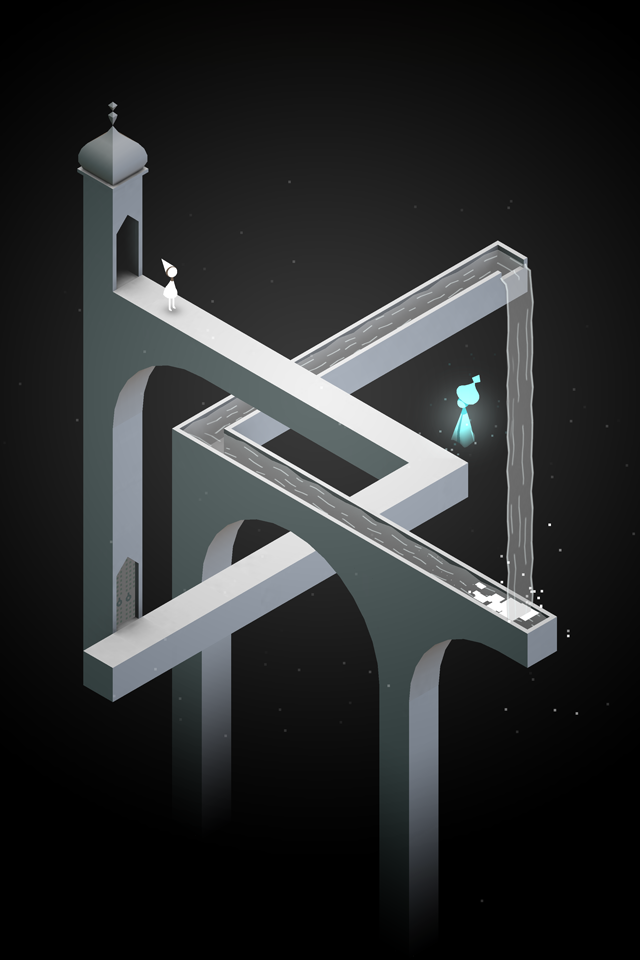
About Monument Valley
Monument Valley: Ninety Minutes, Ten Chapters, and Still the Most Elegant of the Trilogy
Updated November 2026 · Written by the NovaRunway editorial team
Quick Verdict
Monument Valley is the austere one. Where the sequel added a second character and the third game added scope, the original is a single silent princess walking through ten monuments that only connect when you rotate them. It is about ninety minutes long, it has no fail states, and it costs $3.99 with a $1.99 Forgotten Shores expansion and a free Ida's Dream chapter [reference:0][reference:1]. The criticism that has followed it since 2014 is fair: the puzzles are gentle, and most solutions reveal themselves the moment you find the right angle [reference:2]. What you are buying is craft — the Escher geometry, the reactive score, the confidence to end a level the second it has said what it came to say. Buy it. Buy Forgotten Shores too, because that is where the difficulty actually lives [reference:3]. Just do not expect a puzzle game that fights back.
What Monument Valley Actually Is
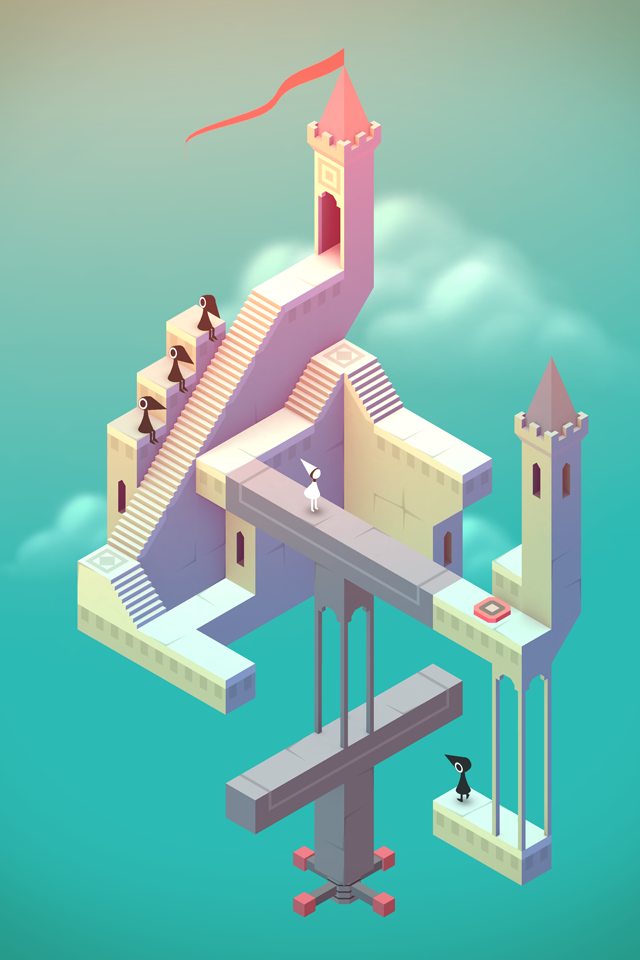
Monument Valley is a perspective-illusion puzzle game from ustwo games, released on Android in May 2014. You guide Ida, a silent princess, through a series of hand-built monuments. You cannot jump, fight or fail. You tap to walk, and you twist and drag the architecture until two surfaces that should not meet suddenly do [reference:4].
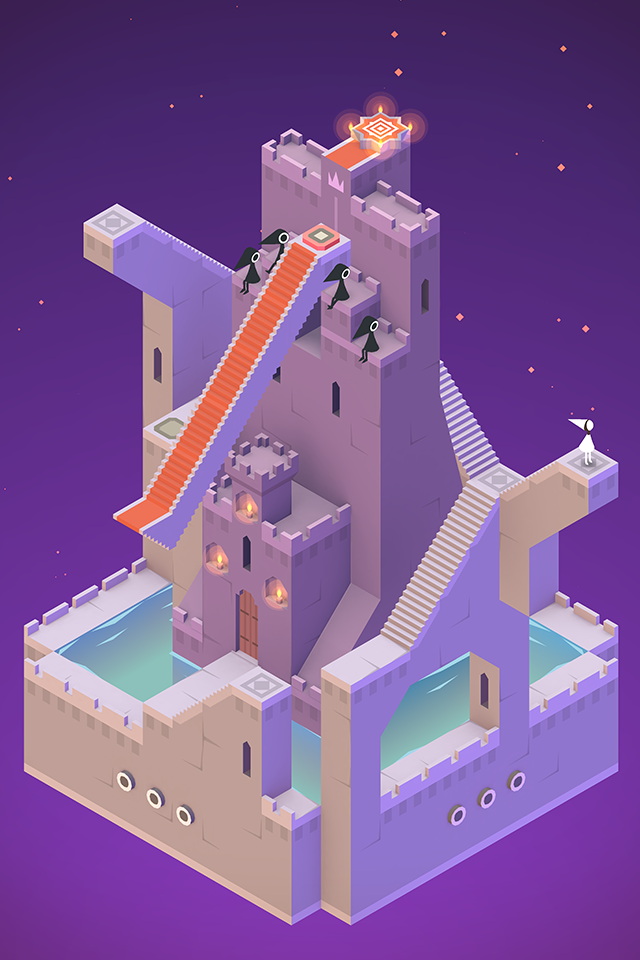
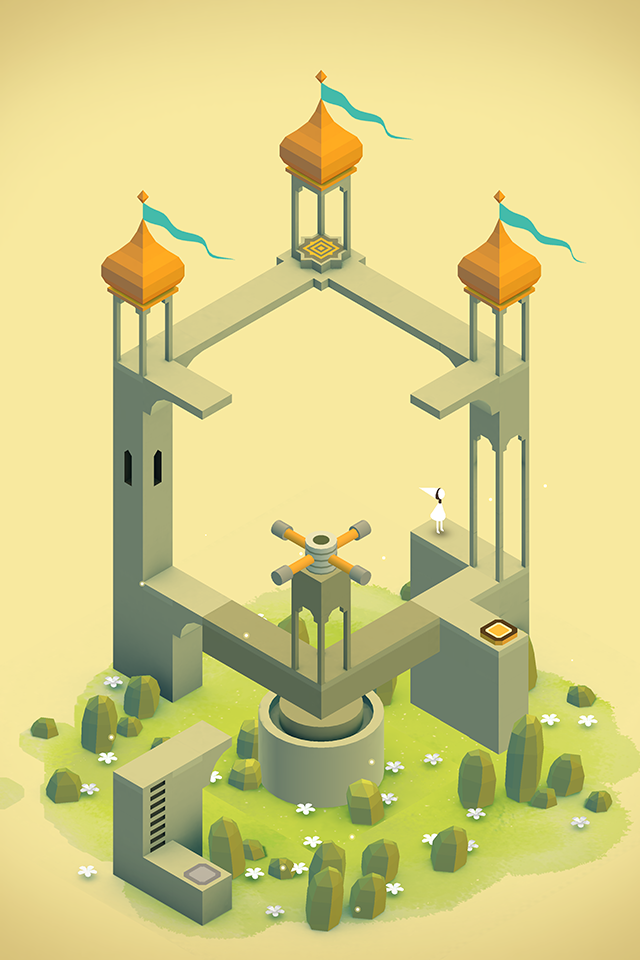
The illusion is the mechanic. The camera is fixed, the geometry is deliberately inconsistent, and the path only exists from the angle you are looking at it. Rotate a gear, a column or a staircase, and a ledge on a wall becomes a ledge on the floor. Walk across, and you have crossed a space that does not physically exist [reference:5].
Crow People are the only opposition, and they are obstacles rather than enemies. They block a tile, patrol a loop, or stand where you need to be. You wait, redirect them, or fold the floor they are standing on out from under them. That is the entire combat system, and it is enough [reference:6].
The base campaign is ten chapters, and the whole thing runs around ninety minutes [reference:7]. That is not a misprint. It is the most common complaint in every review since launch, and it is also the design working exactly as intended.
The Core Loop: Look, Twist, Walk, Arrive
The rhythm of a chapter is unusually calm for a puzzle game, and it is worth describing because it explains why the game feels the way it does.
- Survey without touching anything. Most monuments are readable before you interact. Look first.
- Twist one control and watch which platforms move together.
- Walk Ida to the new connection before you undo the twist.
- Use a second control only once the first geometry is stable.
- Step onto the next floor and let the music resolve [reference:8].
Each chapter introduces one lie about space, then combines it with the lies you have already learned. Early chapters teach rotation, a moving bridge, a hidden underside. Later chapters stack those tricks without turning into a gotcha contest [reference:9].
If you get stuck, the usual cause is over-manipulation. Put the monument back into a readable shape and look for the one ledge that wants a friend [reference:10]. The game is almost never asking you to be clever. It is asking you to look properly.
The Difficulty Question, Answered Honestly
This is the part the store listing skips, and it is the part that decides whether the game is for you.
Monument Valley is not a difficult puzzle game. Critics said so at launch and players still say so now. Giant Bomb put it directly: “there isn't really anything in terms of challenge, as the solutions to most puzzles are immediately apparent” [reference:11]. Metacritic's user reviews land in the same place — the puzzles are “never brutal, at times even too gentle,” though the pacing is “well calibrated and never wears out its welcome” [reference:12]. Wikipedia's summary of the critical reception is blunt about it: critics praised the art and sound design, and noted the lack of difficulty and the short length .
Whether that is a flaw depends on what you wanted. As a puzzle game to be solved, it is thin. As a tactile, meditative object you move through for ninety minutes, it is close to perfect, and the absence of failure is what allows the mood to hold. There is no death screen to break the spell.
The important nuance is that the expansions fix this. Forgotten Shores is meaningfully harder than the base campaign, and Ida's Dream contains the hardest puzzle in the package [reference:14][reference:15]. If the difficulty is your concern, the answer is not to skip the game — it is to buy the DLC.
Forgotten Shores and Ida's Dream: What to Buy
The store listing mentions both, and the distinction between them matters.
Forgotten Shores — paid, around $1.99
Eight additional chapters, sold as a separate in-app purchase [reference:16][reference:17]. It is the correct purchase if you finished the base game and still want more of the same language, not a different genre [reference:18].
Two things make it better than “more of the same.” First, the levels are longer and more complex — eight chapters that are “not that much shorter than the original game” because each one is denser [reference:19]. Second, it introduces mechanics the base game never uses: a crow person steals Ida's hat and you have to get it back; a hollow cube called The Oubliette rotates to reveal a different stage on each spin; switches only activate when a character or object is standing on them, which turns the friendly totem and the crow people into tools rather than scenery [reference:20].
It is also warmer than the base game. The palette is brighter and more varied, and the puzzle design actively asks you to collaborate with supporting characters, which is a different emotional register from the original's solitude [reference:21].
Ida's Dream — free
A standalone dream chapter, originally released as a charity extra, now listed as available [reference:22]. It contains the hardest puzzle in the whole package [reference:23]. Check the current client to confirm it appears in your chapter list without a second fee [reference:24].
If you reinstall and your DLC is missing, use the in-game restore purchases option rather than contacting support. That is the official path [reference:25].
How It Plays on a Phone
Monument Valley was built for touch, and it shows. There is no virtual stick, no controller recommendation, and no awkward port compromise. You tap where you want Ida to go, and you drag the parts of the world that can move. The camera is handled for you, so there is nothing to fight.
That means it works equally well on a phone, a tablet or a Chromebook. The tablet does the art more justice — the monuments benefit from screen space — but nothing is lost on a phone. This is one of the rare cases where the mobile version is the definitive one, not a concession.
Cloud save is supported, so progress carries across devices, and the install is small enough to keep installed indefinitely [reference:26].
Performance is not a concern. The game is a small, stylised 3D scene with a fixed camera. It runs on modest hardware, loads quickly and plays offline. The one caveat is that the store text's device requirements are ancient and no longer accurate — check the live listing for what your build actually needs rather than trusting the description [reference:27].
Audio and Visual Design
The score is not decoration. Audio reacts to your manipulation of the world: a click when a path seats itself is part of the solution language, ambient tracks shift with each monument's mood, and the music resolves when you complete a chapter [reference:28][reference:29]. The game tells you to use headphones, and it is right to.
The art direction is minimalist 3D built on optical illusions and palaces and temples from around the world [reference:30]. Each chapter commits to a palette, which gives the campaign a sense of progression without a word of explanation. It is still one of the best-looking things on Android twelve years later, and it screenshots beautifully.
The story is told in short titles and quiet revelations about monuments and forgiveness. It is not a novel, and players who want a long narrative should not expect one — but the last pedestal lands harder than the word count suggests [reference:31].
The Netflix Situation: A Correction Worth Making
If you have read elsewhere that the Monument Valley games are free with a Netflix subscription, that is out of date.
Monument Valley 3 launched as a Netflix Games exclusive on December 10, 2024, and was removed from the catalogue around June 2025 — a decision ustwo's CEO described as a “complete surprise” [reference:32]. Netflix removed dozens of mobile titles in that period as part of a content-policy revision, and the Monument Valley series was among the prominent casualties [reference:33][reference:34].
After the removal, ustwo reworked Monument Valley 3 and re-released it on Android and iOS as a standalone paid game in December 2025 [reference:35]. The studio has since said it is moving to a PC-first strategy, citing the instability of relying on platform holders, and that mobile will remain an additional area rather than the main one [reference:36][reference:37].
The practical consequence for you: do not plan on playing this through Netflix. Buy it on the Play Store. Check the live listing for Google Play Pass access, which the current store page does list — that is the one subscription route still worth checking before you spend [reference:38].
Which One Should You Play First?
All three games are now standalone paid releases, so the order is a genuine choice rather than a subscription constraint.
| What it is | Best for | |
|---|---|---|
| Monument Valley (2014) | 10 chapters, ~90 minutes, most austere and elegant | Starting here. It is the cleanest statement of the idea |
| Monument Valley 2 (2017) | 14 chapters, mother-and-child story, richer score | Players who want more emotional warmth and a fuller soundtrack |
| Monument Valley 3 (2025 re-release) | Most ambitious and most complex; more variety | Players who have finished the first two and want scope [reference:41][reference:42] |
Opinions split on which is best, and the split is usually about tone rather than quality. One reviewer's ranking puts the first game first, the third second and the second last [reference:43]. Another describes the original as “the most elegant,” the sequel as having richer and more traditionally composed music, and the third as “completely overproduced” . The most common recommendation is simply to play all three in order [reference:45].
For a first-time player, start here. The original teaches the visual grammar that the sequels assume you already know, and it is short enough that starting it costs you an evening.
Beginner Tips for Monument Valley
- Look before you touch. Most monuments are readable in their starting state. Survey the whole screen before manipulating anything [reference:46].
- Twist one thing at a time. Changing two controls at once makes it impossible to tell which platform moved because of which input [reference:47].
- If you are stuck, undo your last twist. The usual cause of being stuck is over-manipulation, not under-manipulation [reference:48].
- Watch the Crow People, do not fight them. They are on fixed loops. Wait for the gap rather than trying to rush past [reference:49].
- Play with headphones. The audio cues when a path seats itself are part of the solution language, and speaker audio loses them [reference:50].
- Buy Forgotten Shores if the base game felt too easy. That is where the real difficulty is, and the levels are longer and more intricate [reference:51].
- Play Ida's Dream last. It is free and it contains the hardest puzzle in the package — better as a finale than an appetiser [reference:52].
- Use restore purchases if DLC vanishes after reinstalling. It is in the settings, and it is the official fix [reference:53].
- Do not buy it expecting a Netflix freebie. Those versions were removed in 2025. Check Play Pass instead [reference:54].
Pros and Cons
| Pros | Cons |
|---|---|
| Exceptional art direction built on genuine optical illusion | Only about 90 minutes of base content |
| Touch controls designed for mobile from the start | Puzzles are gentle; most solutions are immediately apparent [reference:55] |
| No ads, no timers, no fail states, no random purchases | Forgotten Shores is a separate $1.99 purchase [reference:56] |
| Reactive score that functions as a solution cue | Netflix versions no longer available [reference:57] |
| Cloud save across devices | Store text's device requirements are outdated [reference:58] |
| Forgotten Shores is longer and harder than the base game | Little replay value once solved |
| Free Ida's Dream chapter with the hardest puzzle | Premium price feels steep per hour |
| 4.87 rating from 241,000+ Play Store ratings [reference:59] | Story is atmospheric rather than narrative [reference:60] |
Who Should Play It
Buy it if you want a beautiful, calm, finite experience you can finish in an evening — something you can hand to a child, a parent or a non-gamer without explanation, and something that will never ask you for money again after the initial purchase. It is especially good for players who value atmosphere over difficulty, and for anyone who plays games to decompress.
Skip it if you need puzzles with teeth. The base game will not resist you, and if you are unwilling to buy Forgotten Shores, the challenge never arrives [reference:61]. It is also worth skipping if a ninety-minute campaign at $3.99 feels like poor value, or if you dislike wordless storytelling and abstract art — the appeal rests almost entirely on those two things.
Start with Monument Valley 2 instead if you want a fuller story and a richer score, or with Monument Valley 3 if you want scope. But the original remains the cleanest expression of the idea, and it is the right place to begin [reference:62].
Frequently Asked Questions
Is Monument Valley free?
No. It is a premium one-time purchase at $3.99 on Google Play, with regional variation [reference:63]. The Forgotten Shores expansion is a separate in-app purchase of around $1.99 [reference:64].
How long is the game?
The base campaign is 10 chapters and runs roughly 90 minutes [reference:65]. Forgotten Shores adds eight longer, more complex chapters that are not much shorter than the base game [reference:66]. With both, expect two to three hours total.
Is it too easy?
Yes, the base game is gentle — critics and players have said so consistently since launch [reference:67]. Forgotten Shores and the free Ida's Dream chapter are noticeably harder, and Ida's Dream contains the hardest puzzle in the package [reference:68].
Do I need to play the sequels in order?
No. Each is standalone. But the original teaches the visual grammar the sequels assume, and it is the shortest, so starting here is the common recommendation [reference:69].
Is it available on Netflix?
No longer. The Monument Valley series was removed from Netflix Games around June 2025, and Monument Valley 3 was subsequently re-released as a standalone paid game in December 2025 [reference:70]. Check Google Play Pass instead [reference:71].
Does it work offline?
Yes. Once installed, the game plays fully offline. Cloud save requires a connection to sync but is not needed to play.
What is Ida's Dream?
A standalone dream chapter, originally a charity extra, now listed as available at no additional cost. It contains the hardest puzzle in the package [reference:72][reference:73].
I reinstalled and lost Forgotten Shores. What do I do?
Use the in-game restore purchases option in the settings. That is the official fix and it does not require a support ticket [reference:74].
What Android version do I need?
The store text still cites very old requirements, which are out of date. Check the live Google Play listing for the current minimum, since the app has been updated regularly through 2026 [reference:75][reference:76].
Is it suitable for children?
Yes. There is no violence, no text to read, no fail states and no time pressure. It is one of the more genuinely family-friendly games on mobile.
Availability and Pricing
Monument Valley is developed and published by ustwo games. It is a premium one-time purchase on Android at $3.99, with the Forgotten Shores expansion sold separately at around $1.99 and Ida's Dream available at no additional cost [reference:77][reference:78]. It is listed for Google Play Pass access [reference:79], holds a 4.87 rating from over 241,000 ratings, and was last updated in September 2026 [reference:80][reference:81].
Before buying, check the current store listing for regional pricing, the accurate Android version requirement, and whether Play Pass covers it in your country.
Official site: monumentvalleygame.com
Developer: ustwo games
Disclosure: NovaRunway is an independent app and game discovery site. We are not affiliated with, endorsed by, or sponsored by ustwo games or any Monument Valley publisher. All trademarks and intellectual property belong to their respective owners. This article reflects our editorial assessment based on the current Android build and publicly available information, and is provided for informational purposes. Pricing, availability, platform requirements and subscription catalogue inclusion may change — verify with the official store listing before purchasing.