- Developer
- Butterscotch Shenanigans
- Installs
- 100K+
- Downloads
- 0
- Views
- 1
- Updated
- Nov 6, 2026
Screenshots
About Crashlands 2
Crashlands 2 on Mobile: Charming, Deep, and Slow to Get Going
Updated November 2026 · Written by the NovaRunway editorial team
Quick Verdict
Crashlands 2 is a premium open-world crafting RPG with a genuinely funny script, a touch interface designed for phones rather than bolted onto a PC port, and no ads or microtransactions of any kind. It is also slow. The first few hours are a grind of gathering and crafting before the world opens up, and critics who loved the game still flagged that opening as the hardest part to get through. Once it clicks, though, the loop of exploring, befriending aliens, hatching pets and building a base is warm, generous and surprisingly deep — reviewers put it at 35+ hours of content, with a Metacritic average around 80. If you want a comfy survival-crafting game with actual writing talent behind it, this is one of the best premium options on mobile. If you need immediate momentum or dislike gathering-based progression, the opening will test you.
What Crashlands 2 Actually Is
Crashlands 2 is the sequel to Butterscotch Shenanigans’ 2016 cult hit, and it returns to the planet Woanope with the same protagonist: Flux Dabes, intergalactic trucker and reluctant corporate spokesperson. The premise is that Flux has spent years shilling for the Bureau of Shipping, is thoroughly burned out, and comes back to Woanope for a holiday. A mysterious blast knocks her ship out of orbit before she can land, and she crashes into an unfamiliar region of the planet with no friends nearby and a new mystery to solve.
The mystery is the Withering, a blight spreading across Woanope, and the game structures its campaign around figuring out what it is and who is responsible[reference:0]. That gives the exploration a direction beyond “craft better gear,” which matters in a genre where aimlessness is the most common complaint.
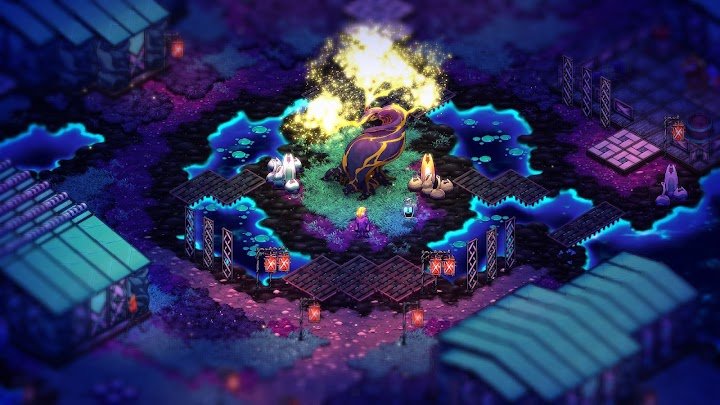
Structurally it is an isometric open-world crafting ARPG, not a linear level-based game. You explore biomes, gather resources, craft equipment and tools, fight creatures, complete quests for alien NPCs, and build a home base. The sequel upgrades the base-building from the first game’s flat system to something with proper walls, roofs and interior space, and adds a pet system built around finding and hatching eggs[reference:1].
It is a premium one-time purchase, priced at $9.99 / €10 / ¥1,200 depending on region, with no adverts, no energy timers and no in-app purchases[reference:2][reference:3]. That is worth stating plainly, because it shapes the design: the game is not trying to monetise impatience, which is why it can afford to be slow.
Story, Tone and Why the Writing Matters
The Crashlands series has always been funnier than its genre peers, and the sequel leans harder into that. Every item name is a pun or a nonsense word, the aliens are written as characters rather than quest dispensers, and the game knows when to let a joke land and when to back off.
Critics singled this out repeatedly. One review described the writing as knowing “when to have the characters rib each other and when to back off, leading to dramatic scenes that actually feel like recognizable interactions rather than overwritten melodrama”[reference:4]. Another called it “charming, hilarious, and surprisingly heartfelt”[reference:5]. That tonal control is rarer than it sounds. Most crafting games treat humour as set dressing; Crashlands 2 uses it to make the NPCs feel like people you want to help, which is the entire engine of its friendship system.
You do not need to have played the first game to follow the story. The sequel continues from it and brings back characters, but it establishes what you need to know early and the plot stands on its own[reference:6]. Playing the original first adds context and a few returning-character payoffs, but it is not homework.
Exploration and the Alien Ecology
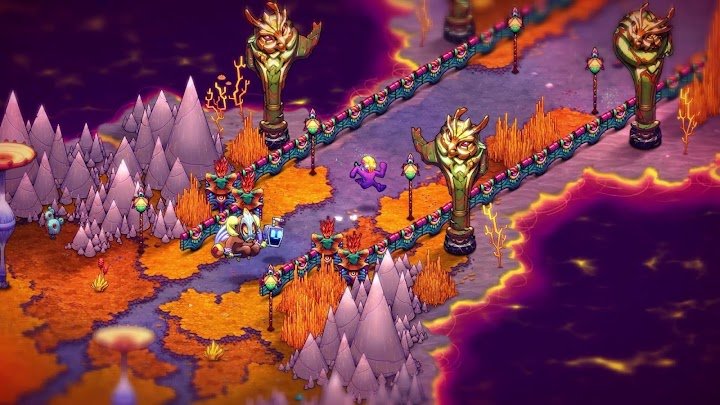
Woanope is the game’s best argument for itself. The world is dense with interactive ecology rather than empty space between quest markers: creatures that can be lured into hazards, resources that only appear in specific conditions, and alien societies with their own problems.
The design encourages systemic play rather than checklist completion. You can lure a Trunkle into a trapped meadow, fish for Pho-rays at night, or help alien kids with a questionable multidimensional experiment — these are not scripted set-pieces so much as systems that can be combined. That flexibility is what makes the world feel alive rather than decorated.
The trade-off is that the game does not always communicate direction clearly. Multiple reviews flag vague quest tracking as a recurring frustration, and the open structure can leave you unsure whether you are stuck or simply missing a resource[reference:7]. The game expects you to wander, which is either the appeal or the problem depending on your tolerance for being lost.
Combat: Dodging, Reading, and the Stat-Check Problem
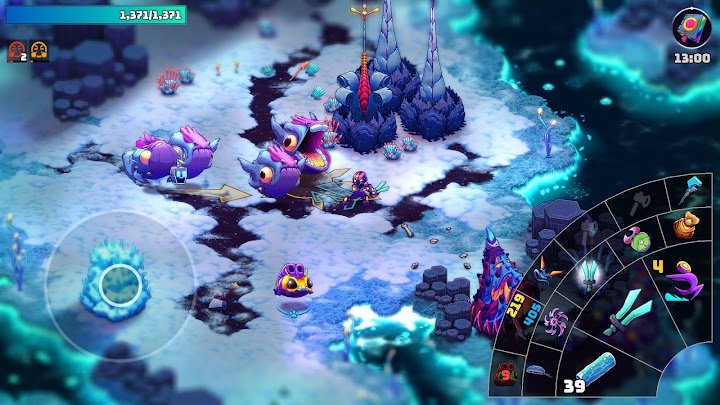
Combat in Crashlands 2 is real-time and isometric, built around dodging and reading enemy attack patterns rather than trading hits[reference:8]. You have a dodge with a cooldown, a set of crafted weapons, and gadgets that range from practical to absurd — the Space Wok is a stun, thrown consumables are crowd control, and some weapons lean into environmental interaction.
The build variety is genuine. You can play as a stealth-and-traps character, a ranged gadget user, or a close-range brawler who chugs an elixir and jumps into the fray. The crafting system supports all of these paths, and the sequel adds enough equipment depth that switching approach mid-game is viable rather than punishing.
The caveat, raised by critics, is that combat can feel stat-checky — meaning some encounters are less about execution and more about whether your gear number is high enough[reference:9]. That is not unusual for the genre, but it does mean the correct response to a wall is usually “go craft better equipment” rather than “play better.” Combat is engaging when the numbers are close and frustrating when they are not.
Friendship, Pets and the Base
The sequel’s headline addition is the friendship system. NPCs are not just quest-givers; helping them unlocks recipes, skills and story, and the game frames this as the core progression loop rather than a side activity[reference:10]. That is a smart inversion of the usual crafting-game structure, where NPCs exist to serve the player’s crafting. Here, the relationships are the progression.
Pets are the other major addition. You find eggs in the world, figure out the conditions required to hatch them, raise the resulting creature, and it fights alongside you. Different pets have different hatching requirements and different combat roles, and the system gives exploration a tangible reward beyond materials[reference:11]. Reviewers have noted that pet AI is not perfect and attack frequency is modest, but the hatching-and-raising loop is a meaningful addition rather than a cosmetic one.
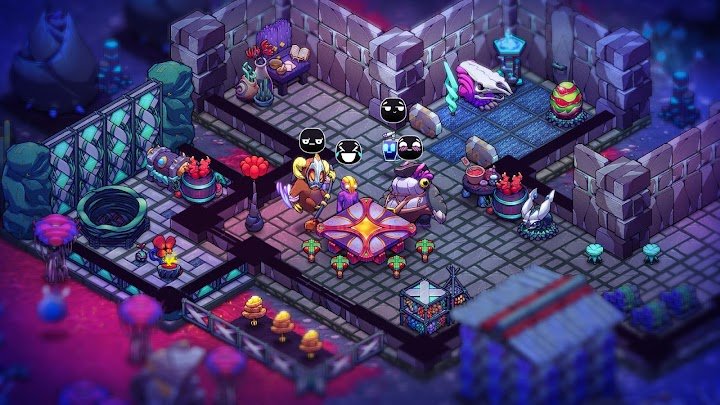
Base-building is more detailed than in the first game: tall walls, proper roofs, and interior space for crafting and farming[reference:12]. It is not a full construction sandbox — you are not building freeform architecture — but it gives you a functional home rather than a crafting station with a bed next to it. The limitation, noted by some players, is that the building system favours rectangular structures and does not support building on water, which constrains layout creativity[reference:13].
How It Plays on a Phone: Touch-First, Cross-Save, Offline
This is where Crashlands 2 separates itself from most premium ports.
The interface was designed for touch, not adapted to it. The game uses a left-side movement control and a right-side action cluster, with a circular command scheme for gadgets and abilities, and the UI avoids covering the centre of the screen where the action happens[reference:14]. One player review put it bluntly: the mobile adaptation is good enough that “it makes me suspect the game was originally a mobile game”[reference:15]. That is the correct impression — the touch layout is not a compromise you tolerate, it is the intended way to play for many people.
Controller support is included for players who prefer sticks, and it works, but it is genuinely optional here rather than mandatory. That is unusual for an action RPG and worth emphasising: you do not need to buy hardware to enjoy this on a phone[reference:16][reference:17].
Cross-save works cleanly. Progress syncs between mobile and PC, so you can play on a phone during a commute and continue on a desktop at home without friction[reference:18][reference:19]. Cloud saves are supported, and the game is playable offline once installed, which makes it a strong travel game[reference:20].
Performance is solid on modern devices. The art is 2D/2.5D rather than photoreal 3D, so the hardware demands are modest, and the game holds up on mid-range phones. Tablets benefit from the larger inventory UI and more visible world, but the phone experience is not compromised[reference:21].
Where It Falls Short
Honest reviews of Crashlands 2 converge on a few criticisms, and they are worth repeating rather than burying:
- The opening is slow. Early progression is described as sluggish, with the game taking a few hours to reach the point where its systems start reinforcing each other[reference:22][reference:23].
- Quest tracking is vague. The game does not always tell you clearly what it wants, and the open structure can leave you unsure whether you are progressing or wandering[reference:24].
- Enemy variety thins out later. Some players report repetition in the back half, with certain biomes feeling underpopulated compared to the first game’s roster[reference:25].
- Combat can become a stat check. When your gear is behind the curve, fights feel less like execution tests and more like arithmetic[reference:26].
- The building system has limits. Rectangular structures only, no building on water, and less layout freedom than a dedicated construction game[reference:27].
None of these are dealbreakers, but together they explain why the game sits around 80 on Metacritic rather than higher. It is a warm, well-written, generous game with rough edges in pacing and communication.
Beginner Tips for Crashlands 2
- Push through the first two hours. The opening is the weakest part. The game does not show you its best systems until you have enough recipes and NPC relationships to start combining them.
- Craft thrown consumables early. Ranged options like thistles and thistlesticks let you soften enemies before they reach you, which matters more than raw weapon damage in the early game[reference:28].
- Always carry healing items. The game’s creatures hit harder than they look, and a stack of healing food is the difference between a bad fight and a death[reference:29].
- Help NPCs even when the reward is not obvious. Friendship unlocks recipes and skills, and those unlocks are the main progression gate. Skipping side conversations slows you down later.
- Hatch eggs as soon as you can. Pets add combat support and make exploration safer. The hatching conditions are not always obvious, but the payoff is worth the detour.
- Use the touch UI as designed. Do not try to force a controller layout if you are comfortable with thumbs. The circular command scheme is deliberate and reduces screen clutter.
- Play across devices if you can. Cross-save works, and the game suits a split between long sessions at home and short sessions on a phone.
- If a fight feels impossible, go craft. The answer to a combat wall is almost always better equipment, not more attempts.
Pros and Cons
| Pros | Cons |
|---|---|
| Touch-first UI that genuinely suits a phone | Slow opening hours before the systems click |
| Premium pricing: no ads, no IAP, no energy timers | Vague quest tracking can leave you lost |
| Strong writing and genuinely funny characters | Combat can feel like a gear stat check |
| Friendship system drives progression meaningfully | Enemy variety thins in the later biomes |
| Pets and more detailed base-building | Building system is rectangular and constrained |
| Cross-save between mobile and PC, offline play | Pacing in the back half can feel repetitive |
| 35+ hours of content for a one-time price | Not a full construction sandbox if that is what you want |
Who Should Play It
Try it if you want a premium crafting RPG with personality — something you can play offline, across devices, without being sold anything mid-game. It is especially good for players who liked the first Crashlands, or who enjoy survival-crafting games but bounce off the grim tone of most of the genre. The touch controls make it one of the few games of this depth that genuinely belongs on a phone.
Skip it if you need immediate momentum, dislike gathering-based progression, or get frustrated by unclear objectives. It is also worth skipping if you mainly want combat — the fighting is competent but the game’s heart is in exploration, crafting and relationships. And if you already own the PC version, the mobile version is the same game with cross-save rather than a separate experience, so buy it for portability, not for new content.
Frequently Asked Questions
Is Crashlands 2 free?
No. It is a premium one-time purchase, priced at approximately $9.99 / €10 / ¥1,200 depending on region. There are no adverts, no in-app purchases and no energy timers.
Do I need to play the first Crashlands?
No. The story continues from the original and brings back characters, but the sequel establishes what you need to know and stands on its own. Playing the first game adds context but is not required.
Does it work offline?
Yes. Once installed, the game is fully playable without an internet connection. Cloud saves require a connection to sync, but they are not needed to play.
Can I transfer my save between mobile and PC?
Yes. Cross-save is supported, and progress syncs between mobile and PC, so you can continue the same game across devices.
Do I need a controller?
No. The touch interface is designed for mobile and works well with thumbs. Controller support is included for players who prefer it, but it is optional.
How long is the game?
Reviewers cite 35+ hours of content, depending on how much side content and base-building you engage with. The main story is shorter if you focus on it.
Is it suitable for younger players?
The tone is comedic and the violence is stylised, but the game involves crafting, resource management and some reading. The difficulty and pacing may frustrate younger players more than the content itself. Parental judgement is best.
Does it have multiplayer?
No. Crashlands 2 is a single-player experience. There is no co-op or online multiplayer.
Why does the game feel slow at the start?
The opening is the most common criticism. Early progression is deliberately gradual, and the game’s best systems — friendship unlocks, pets, deeper crafting — only start reinforcing each other after a few hours. Most reviewers say it is worth pushing through.
Availability and Pricing
Crashlands 2 is developed and published by Butterscotch Shenanigans. It is available on Android, iOS and PC. The mobile version is a premium one-time purchase at approximately $9.99, with regional pricing varying. There are no in-app purchases or adverts.
Before buying, check the current store listing for the price in your region, device compatibility, and the install size. Cross-save requires the same account setup across devices.
Official site: bscotch.net
Developer: Butterscotch Shenanigans — Crashlands 2
Disclosure: NovaRunway is an independent app and game discovery site. We are not affiliated with, endorsed by, or sponsored by Butterscotch Shenanigans or any Crashlands publisher. All trademarks and intellectual property belong to their respective owners. This article reflects our editorial assessment based on the current mobile build and publicly available reviews and information, and is provided for informational purposes. Pricing, features and availability may change — verify with the official store listing before purchasing.